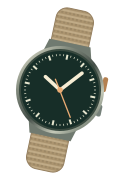
Galaxy Watch9
For everyday wear, try the watch with your usual sleeves. Bend your wrist as you would at a keyboard and check where the case rests.
 Samsung Galaxy ShopSamsung reseller
A watch has to fit under a cuff, stay put on a run and be readable at a glance. Start with the case and strap before choosing a connection.
For everyday wear, try the watch with your usual sleeves. Bend your wrist as you would at a keyboard and check where the case rests.
For time on the trail, try reading the dial at arm’s length and operating the controls with the gloves you normally pack.
The case diameter tells only part of the story. Look straight down at the points where the strap meets the watch. If they extend past the flat top of your wrist, the band can leave a gap even when tightly fastened. A shorter case or a more flexible band may sit closer.
Try the movements you repeat most. Rest your palm on a desk, pull a jacket sleeve over the watch, then bend your wrist as if gripping a handlebar. Notice whether the edge presses into your hand. Repeat with the strap one adjustment looser before deciding between two sizes.
Pick the information you actually want mid-walk or mid-run. A large elapsed-time display is easier to glance at than a face crowded with small indicators. Check the dial outside and under a sleeve. A face that looks good in a product photo can feel quite different at arm’s length.